
Industry Leader 2026
FROM SPARKS TO FLAME THE ENGINE THAT CARRIES YOUR NAME
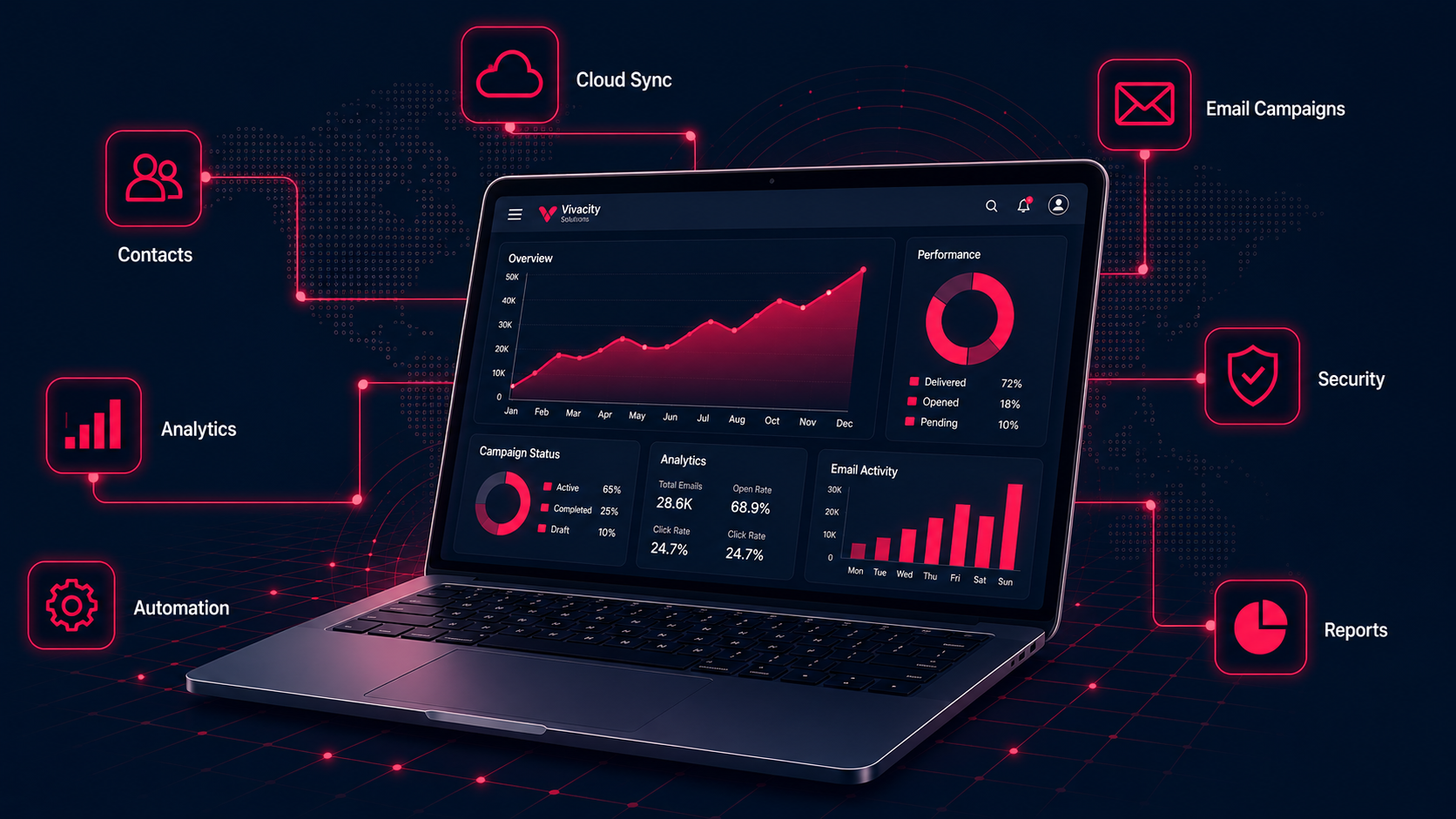
Stop juggling tools and start scaling with CRM services for businesses built around a high-performance CRM architecture designed to automate your entire sales pipeline. Capture every lead, eliminate manual follow-ups, improve customer relationships, and close deals faster with an industry-leading, intuitive CRM system.
Request a System Architecture Audit
60 days Free Trial
No Credit Card Required
Most affordable Pricing
Revenue Growth
AI Predictive
Analysis Active
The Problem
Your CRM Isn't Built for How Service Businesses Actually Sell
Service businesses struggle with generic CRM software that wasn’t designed for their unique workflow. Three major problems stand out
Leads Scatter Everywhere
Leads come from web forms, LinkedIn, cold calls, referrals, and webinars. Generic lead tracking software and traditional CRM for sales teams can’t capture them all automatically. Up to 50% of leads disappear before you even engage
Sales Teams Waste 30-40% of Their Time on Admin
Manual entry into CRM systems, updating pipelines by hand, and logging emails slows your team. Without deal tracking software and sales automation software, reps spend more time managing data than closing deals.
No Unified Communication or Client Visibility
Emails, calls, SMS, and LinkedIn messages scatter across tools. Without CRM with client portal or CRM with reporting dashboard , clients lack visibility, renewals are delayed, and churn rises.
The Solution
Sales Automation Software Built for Service Professionals Implemented in 10 Days
Vivacity Solutions provides the best CRM software for service businesses because it works the way you work. That will be implemented in 10 days.
Vivacity is the best CRM software for service businesses because it works the way you work.
Unified Lead
Capture
All leads from web forms, phone, SMS, emails, LinkedIn, and APIs enter one CRM platform inbox. Track every opportunity with prospect management system and CRM for lead nurturing tools.
Automated Follow-Up
Sequences
Multi-touch CRM with email marketing and CRM with SMS marketing sequences run automatically. Day 1 email, Day 3 SMS, Day 5 call reminder. Reps focus on selling, not sending repetitive messages.
Branded
Client Portals
Clients access CRM with client portal, see project status, deliverables, and timelines. Fewer "Where are we?" questions. Higher satisfaction. More renewals.
AI-Powered Insights
Auto-transcribed calls, auto-logged emails, and CRM with analytics highlight winnable deals. Reps close faster using CRM with workflow automation insights.
Real-Time
Reporting
Dashboards provide lead sources, conversion rates, sales pipeline management, and ROI. CRM with reporting dashboard helps you forecast and make data-driven decisions
Manage Relationships Where
Smart Technology Meets
Seamless Simplicity
INDUSTRY-SPECIFIC SOLUTIONS
The Best CRM
The Best CRM
for Your Industry
Consultants & Advisory Firms
Solution: Multi-contact tracking, automated renewal reminders, transparent client portal.
30% faster deal close; 40% more deals
Marketing & Creative Agencies
Solution: White-label client portal, automated dashboards, automated renewals.
Retention 68% → 92%
Coaches & Course Creators
Solution: Unified lead capture, CRM for lead nurturing, automated payment tracking.
Cycle: 45 → 18 days
Health Insurance & Benefits Brokers
Solution: Automated renewals, multi-contact tracking, compliance automation.
Renewal rate: 78% → 94%
B2B SaaS & Managed Services
Solution: Integrated booking calendar, trial activation workflows, success dashboards.
Trial activations: 40% → 85%
Local Service Businesses
(HVAC, Plumbing, Dental)
Solution: SMS reminders, online booking, review automation.
Conversion: 30% → 75%
KEY FEATURES
Everything You Need to
Everything You Need to
Manage Leads Automate Follow-Ups and Scale
Lead Capture & Qualification
- Automatic from web forms, SMS, email, LinkedIn, API
- Lead management system & scoring for sales readiness
- Routing to the correct team members automatically
Sales Automation & Follow-Up
- Multi-touch sales automation software (email, SMS, phone)
- Pipeline moves with CRM with workflow automation
- Deal health scoring and automated reminders
Unified Communication (One Inbox)
- Email, SMS, calls, chat—CRM with client portal
- Automatic logging, call transcription, two-way SMS
Client Portals & Transparency
- Branded portals, appointment scheduling, invoicing
- Secure file sharing, project tracking, CRM with invoicing
Marketing Automation & Lead Nurture
- Behavioral-triggered email and SMS
- Funnel automation software, landing page builder, CRM for lead nurturing
Reporting & Analytics
- Real-time CRM with analytics dashboards
- Accurate pipeline forecasting
- Performance and ROI tracking per channel
Integrations
- Native apps (Stripe, Calendly, Slack, Google Workspace)
- Zapier connectivity
- Robust CRM with API access
Team Collaboration
- Shared pipelines and centralized workspaces
- Task assignment and detailed activity audit
- CRM with task management tools
how it & works
From Scattered Leads to Organized Sales
From Scattered Leads to Organized Sales
(3-Step Implementation)
From Scattered Leads to Organized Sales. Three Steps.
Step 01
Capture Everything
All leads flow in automatically using lead tracking software.
Step 02
Automate Your Follow-Up
Multi-channel CRM with automation sequences run while you sleep.
Step 03
Close Deals & Scale
Dashboards, portals, renewal triggers; CRM for sales teams ensures predictable growth.
WHY CHOOSE US
Built for Service Businesses Go Live in 10 Days Not 90
Built for Service Businesses. Implemented in 10 Days. Not 90.
01
Purpose-Built for Service Professionals
Most CRMs are one-size-fits-all. Vivacity was designed specifically for service-based businesses.
02
Lightning-Fast Implementation
Generic CRMs take 3–6 months. Vivacity takes 10 days. Your team is productive from day one.
03
Proprietary Architecture
Built from the ground up — not a rebranded platform. Advanced customization built-in. No licensing bloat.
04
White-Label Capability
Rebrand as your own CRM. Sell to clients. Add $50K–$200K in annual revenue effortlessly.
05
Expert Implementation Support
Vivacity handles implementation, training, and ongoing support for your entire team.
06
Unified Hub Communication
Email, SMS, phone, chat — all in one inbox. Your team sees every message. Clients feel heard.
07
Client Portals Drive Retention
Branded portals give clients real-time visibility. Higher satisfaction and more referrals.
CASE STUDIES
Proven Results
Proven Results
Across Industries
See how businesses like yours scale effortlessly with Vivacity Solutions.
Consulting Firm
30% Faster
Achieved a 30% faster deal close rate by utilizing our specialized CRM for consulting firms.
Marketing Agency
68% → 92%
Massive retention boost with automated CRM workflows and real-time reporting dashboards.
Health Insurance Agency
Zero Misses
Eliminated compliance risks instantly using our secure CRM designed for insurance agencies.
Coaching Business
Reduced Cycle
Drastically reduced the lead-to-customer conversion cycle using our CRM for lead nurturing scenarios.
TRUST & CREDIBILITY
Built by Service Business Experts.
Built by Service Business Experts.
Trusted by 50+ Professionals.
50+ Active Customers
Across consulting, agencies, coaching, insurance, SaaS, and local services.
95% Retention Rate
Our dedicated CRM services drive sustainable growth and measurable results.
10-Day Implementation
Start using your custom CRM platform fast with our guaranteed launch timeline.
60-Day Guarantee
Try our CRM solution risk-free. If pipelines don't improve, you get a refund.
Expert Team
Real humans, not chatbots, guiding CRM adoption for your sales teams.
SOC 2 Compliant
Enterprise-grade network security ensuring your cloud CRM remains uncompromised.
GDPR Compliant
Strict compliance protocols so your customer data remains safe in our online CRM.
No Lock-In
True flexibility with month-to-month business CRM subscriptions. Cancel anytime.
RISK REVERSAL
We're Putting the
We're Putting the
Risk on Us. Not You.
Buying CRM software is a leap of faith, but Vivacity minimizes your risk:
60-Day Money-Back Guarantee
Try our CRM solution for 60 days. If pipeline visibility, deal close rates, or team productivity don’t improve, we refund you.
10-Day Implementation Guarantee
Your team is productive in 10 days using our CRM with workflow automation. If not, we fix it free or refund you.
Measurable Results in 30 Days
See immediate improvement in lead tracking software, sales pipeline management, and automated follow-ups. If you don’t see 15%+ improvement by day 30, we work with you free until you do.
Month-to-Month Commitment
No annual contracts. Flexible CRM for sales teams subscription. Cancel anytime.
Dedicated Human Support
Real people guiding you in CRM for lead nurturing, CRM with email marketing, and CRM with integrations.
URGENCY
Stop Losing Deals to Process Failures.
Stop Losing Deals to Process Failures.
Start Closing More.
Your competitors are implementing sales automation software, improving pipelines, close rates, and team efficiency. You need a CRM system built for service businesses—implemented fast, proven to work.
Limited-Time Founder Pricing (First 100 Customers)
- Lock in founding pricing
- Free 90-day implementation (normally $2,500)
- Free first month to prove ROI
- Free white-label portal access (first year)
Lock In Founder Pricing – Start Your Free Trial
60 days free. No credit card. No commitment. Cancel anytime.
Not Sure Yet? Get a Free Roadmap
Download our guide: "CRM Roadmap for Service-Based Businesses" – learn how to structure your lead management system, automate workflows, and implement CRM with automation without chaos.
Download Free RoadmapFrequently Asked Questions
Common Questions About Vivacity CRM
How long does implementation actually take?
Most teams are fully up and running in 7–10 days. Leads captured and auto-followed-up by day 5. Full optimization takes 30 days. You see ROI from day one.
Will our team actually use it?
Absolutely. Unlike generic CRM systems, Vivacity is built for YOUR workflow. Training included ensures adoption
Can it integrate with existing tools?
Yes. We support 500+ apps via Zapier and native integrations like Stripe, Calendly, Slack, and Google Workspace. CRM with API access also available.
Can we create custom workflows?
Data safety is non-negotiable. SOC 2 compliant. SSL encrypted. Regular security audits. GDPR and CCPA compliant. You own your data; we manage it.
Can you integrate with our current tools?
Yes. Advanced CRM with workflow automation is built in. For unique needs, our developers are available.
How does Vivacity compare to HubSpot/Salesforce/Zoho?
Vivacity delivers 90% of enterprise features at 20% of the cost, implemented in 10 days. No bloated CRM platform, no months of setup
Training & onboarding?
Live onboarding, documentation, and ongoing support. Teams are productive in 10 days with CRM for lead nurturing.
What if we outgrow the system?
Vivacity scales to thousands of users, unlimited CRM with integrations, and unlimited contacts.
What's the commitment?
Month-to-month. Cancel anytime. No contracts, no lock-in. Stay because you're getting value, not because you're trapped.
Can we white-label and resell?
: Yes. Our business CRM allows white-labeling for new revenue streams without building new software.
Is it secure and compliant?
SOC 2 compliant, SSL encrypted, GDPR compliant. Your data stays secure in our cloud CRM..
What happens if we outgrow the system?
You won't. Vivacity scales to thousands of users with unlimited customization and unlimited contacts.
Commitment?
Month-to-month CRM services, cancel anytime.
Support options?
Email and phone support for all plans. Priority support for Growth and Scale. Enterprise gets a dedicated account manager.
Transparent Pricing
CRM Plans
Every plan includes done-for-you onboarding in the first. After setup, you keep full control — manage your CRM independently anytime.
Monthly
Yearly Save ~20%
Starter Best
Basic Plan
Free
— for 60 days · then $10 /month
A ready-to-use CRM foundation — fast, clean, and built for action.
- ⚙️ Done-for-you setup
- 🧩 Custom pipeline stages
- 🔄 Lead routing + onboarding
- 🤖 1 automation + booking page
- 📅 Integrated calendar
- 📥 Import up to 1,000 leads
- 🏢 1 sub-account
1 team based / lead capture
Includes min. onboarding
Most Popular
Most Popular
Pro Plan
$
40
/month
Built for real flow + automation.
- 🤖 Advanced automations
- 📅 Smart team calendar
- 📊 Advanced dashboards
- 🏢 2 sub-accounts
- 📥 Import up to 5,000 leads
- 🧠 Complete funnel setup
- ✉️ Priority email
- 💬 Live chat
- 📞 Phone support
1 team lead capture
Migration onboarding
Scale More
Master Plan
$
120
/month
Complete growth stack.
- 🧩 Advanced pipelines
- ⚙️ Custom workflows
- 📊 Real-time analytics
- 📅 Multi-team calendar
- 📈 10k+ leads
- 🌐 4 sub-accounts
Dedicated onboarding
Priority onboarding
Starter Best · Yearly
Basic Plan
$
400
/year
After trial · one renewal · save vs 12× monthly
Lock in your foundation for the year: one invoice, quarterly tune-ups, and the same fast setup.
- 30-day trial, then $400/year (single renewal)
- Done-for-you setup + pipelines aligned to how you sell
- Quarterly CRM tune-up (stages, fields, basic hygiene)
- Lead routing + onboarding; annual import window up to 1,000 contacts
- 1 automation + booking page + one workflow refresh / year
Lite CRM with a predictable yearly rhythm.
Renews annually · cancel per your agreement
Most Popular
Most Popular · Yearly
Pro Plan
$
768
/year
~$64/mo effective · save vs monthly
Automation and funnels for the full year, with reviews so your system keeps pace as you scale.
- Advanced automations + 3 sub-accounts for the annual term
- Bi-annual funnel & conversion review
- Import up to 5,000 leads / year with migration checkpoints
- Complete funnel setup + two optimisation passes
- Priority turnaround on scoped changes (business hours)
Best for teams running volume all year.
Renews annually · migration onboarding included
Scale More · Yearly
Master Plan
$
1536
/year
~$128/mo effective · save vs monthly
Full growth stack on an annual partnership: workflows, capacity, and quarterly strategy.
- Advanced pipelines & custom workflows for the full year
- 10k+ lead capacity + quarterly list hygiene
- Automation + analytics + quarterly performance recap
- Four strategic sessions / year (roadmap, scale)
- White-glove onboarding + annual architecture review
For CRM as core infrastructure year-round.
Renews annually · priority onboarding & roadmap
Ongoing Support
Support Plans
Want us to run your system always? Choose a support tier for ongoing customisation, fixes, and performance improvements.
Monthly
Yearly Save ~20%
Monthly
Basic Support
Need a safety net — quick help when you need it most.
- ✉️ Email & ticket handling support
- 📅 Basic appointment booking setup & fixes
- ⚙️ Simple workflow automations (light edits)
- 📊 Monthly system health & performance check
- 🌐 Basic website edits (content / small updates)
Reach us quickly on your hours (in your zone)
Request Pricing →
For lite support
Professional
Professional
Pro Support
For CRM systems getting an extended long-term build.
- 📅 Advanced appointment booking system management
- ✉️ Email marketing setup + campaign support)
- 🤖 Complex automation building & optimisation
- 📊 Funnel + CRM performance tracking
- 🌐 Website optimisation (funnels, pages, integrations)
- 🔄 Workflow restructuring + scaling improvements
- 📬 Email/SMS deliverability monitoring
- ⚡ Priority response support
- 💬 Live chat support
- 📞 Scheduled support calls
Pipeline + standing improvements for clarity &...
Request Pricing →
White Glove
Master Support
We run CRM, manage the as-is in-house operations.
- 👤 Dedicated CRM & systems operator
- 📅 Full appointment booking system management
- ✉️ Full email marketing operations (campaigns, sequences, segmentation)
- 🤖 Advanced automation architecture (end-to-end systems)
- 🌐 Website funnel ownership (landing pages + conversion systems)
- 📊 Real-time performance monitoring + optimisation
- 🧠 Continuous scaling + systems improvement roadmap
Full ops CRM management
Request Pricing →
Yearly
Basic Support
Annual retainer: one agreement, predictable coverage for 12 months.
- Support desk (email / ticket) for the 12-month term within plan hours
- Bug fixes + troubleshooting for scoped small fixes across the year
- Quarterly workflow tidy-ups (logic, fields, light routing)
- Quarterly CRM health digest with recommended next steps
- Single annual invoice option after scope is aligned
Predictable lite support in your timezone all year.
Request Pricing →
12-month agreement · scope confirmed before kickoff
Professional
Professional · Yearly
Pro Support
Annual partnership with structured reviews as your CRM evolves.
- Priority support + faster responses for annual clients
- Workflow optimisations on a year-long improvement schedule
- Funnel performance support with two structured reviews per year
- System improvements + model refinement summarised each quarter
- Email/SMS checks + year-end channel health summary
Steady iteration without renegotiating every month.
Request Pricing →
Bi-weekly cadence available inside annual scope where agreed
White Glove · Yearly
Master Support
Dedicated lead for the contract year, exec-ready visibility, roadmapped builds.
- Dedicated specialist for the full 12 months
- Automations, upgrades + new builds roadmapped across the year
- Performance monitoring + rolling ops reporting for stakeholders
- Four quarterly strategy sessions + annual leadership recap
- Full ops CRM management + annual continuity documentation
When CRM is mission-critical year-round.
Request Pricing →
Renewal planning included · priority roadmap slots
◆ Support Center
We're Here to Support Your CRM Journey
Premium Care
Support Team
God-tier assistance available around the clock to ensure your business scaling is seamless.
Get in Touch
Fill out the form and our team will get back to you within 1 hour.
🔒 Your information is safe. We respond within 1 business hour.
✓
Message Received!
Our support team will reach out shortly.
Check your inbox for a confirmation.
Get Weekly CRM
Growth Tips
Stay updated with the latest CRM insights, product updates, and business growth tips delivered straight to your inbox.