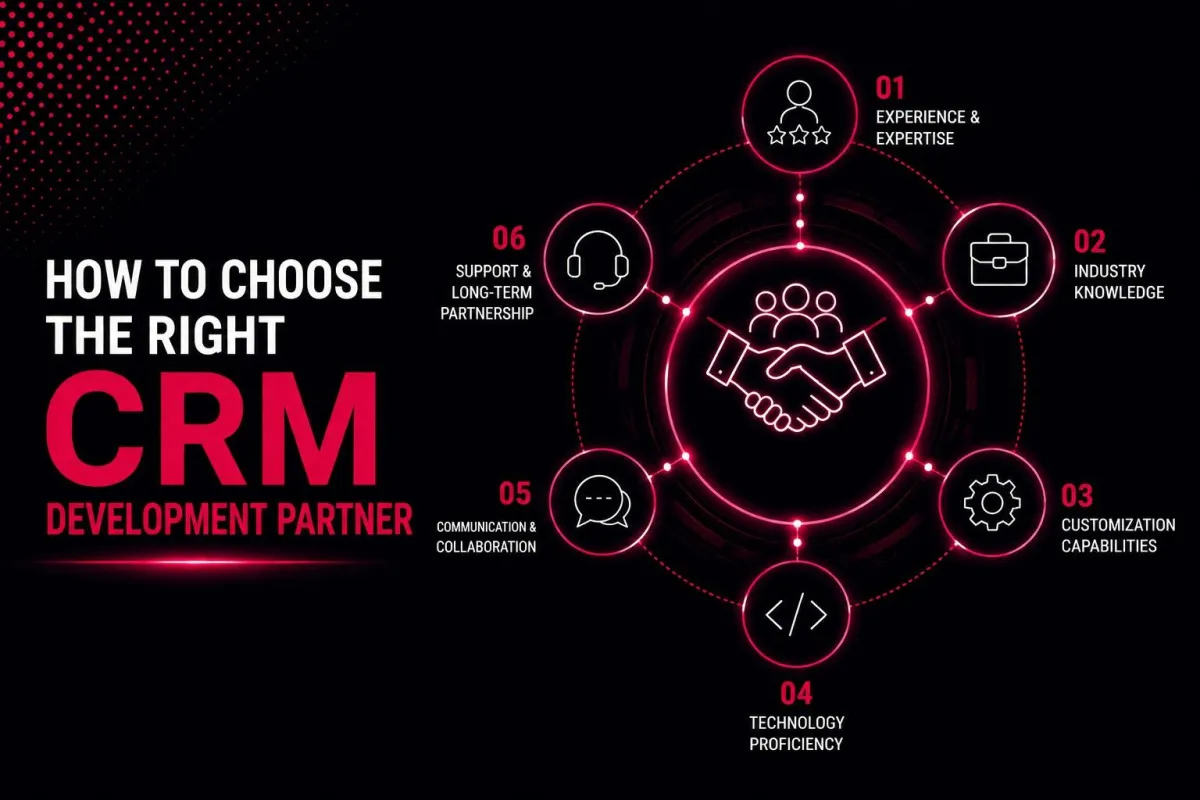
How to Choose the Right CRM Development Partner
I’ve seen it happen more times than I’d like to admit. A business spends months and a small fortune on a new Customer Relationship Management system, only to end up with software that nobody uses, a partner who disappears after launch, and a sinking feeling in their stomach. The problem wasn’t the CRM. The problem was the CRM Development Partner they chose.
Choosing the right CRM Development Partner is arguably more important than the CRM itself. A brilliant system built by the wrong team will fail. A decent system built by a dedicated, communicative CRM Development Partner will succeed. So how do you separate the heroes from the hype?
Let me walk you through exactly what to look for, what questions to ask, and how to avoid the most painful mistakes. This comes from years of watching businesses succeed, and sometimes struggle, with their CRM Implementation.
Know What You’re Really Buying
When you hire a CRM Provider, you’re not just buying code. You’re buying a relationship that will last years. You’re buying CRM Support, CRM Customization abilities, and someone who will answer the phone when your sales team accidentally deletes a critical field. In short, you’re investing in a CRM Development Partner who thinks like an owner.
The best CRM Development Partner cares about your Business Growth, your Sales Team Productivity, and your Customer Retention. They don’t just hand over a login and disappear.
So before you even start looking, get clear on your own needs. What CRM Workflows do you need to automate? What Sales Pipeline stages matter most? How many users will you have in two years? The more you know about your CRM Solution requirements, the easier it is to spot a CRM Development Partner who truly listens.
Not sure what to build first? Our guide on Custom CRM Development walks you through the essential features every business needs.
The Wrong Partner vs. The Right Partner
Let me paint you two pictures.
The wrong partner sells you a CRM System that’s mostly pre‑built, promises the moon, and then delivers a rigid, generic tool. They charge extra for every small change. Their CRM Support is a ticket system with 48‑hour responses. They don’t understand your industry. They vanish after the final payment.
The right partner asks a hundred questions before writing a single line of code. They show you examples of Scalable CRM Solutions they’ve built for similar businesses. They talk about Long-Term CRM Strategy and CRM Upgrades before you even ask. They become a trusted advisor, not just a vendor. That’s the kind of CRM Development Partner you want.
The difference is night and day. And it starts with how you evaluate them.
What to Look for in a CRM Development Partner
Real Experience, Not Just a Pretty Portfolio
Anyone can slap together a demo. You want a CRM Provider who has solved problems like yours. Ask for case studies. Ask to speak with past clients. Find out what happened after launch. Did the partner stick around for CRM Troubleshooting? Did they help with CRM Migration from an old system?
A great CRM Development Partner will have experience with Enterprise Sales CRM as well as CRM for Small Business. They’ll understand Sales Lead Tracking, Sales Call Logs, and Lead Tracking across multiple channels. They won’t just say “we can do it”, they’ll show you how.
Transparent CRM Pricing and Contracts
Hidden fees are a red flag. You need a CRM Development Partner who is upfront about CRM Support Costs, development hours, and ongoing maintenance. Ask: What’s included in the initial price? What happens if we need CRM Customization Options after launch? How do you handle scope creep?
A trustworthy CRM Development Partner will give you a clear estimate with line items, not a vague “starting at” number followed by surprises. They’ll also explain their CRM Business Solutions pricing model, fixed price, time and materials, or hybrid.
A Process That Involves You
You should never feel like a passenger. The right CRM Development Partner involves your team in discovery, design, testing, and training. They use CRM Workflow Automation tools that you can understand. They create CRM Reporting dashboards that your sales manager can tweak without calling a developer.
Ask about their CRM Integration Solutions. Do they handle CRM Integration with your existing email, calendar, ERP, and marketing tools? Have they worked with Mobile CRM and iPad CRM before? Do they build Client Relationship Management Software that actually works on phones and tablets?
Integration is where many projects fail. Learn how to avoid the Common Challenges in CRM Automation with our troubleshooting checklist.
Focus on Scalability and Future Needs
Your business today is not your business in three years. A good CRM Development Partner builds Scalable CRM Solutions that grow with you. They use cloud infrastructure that handles more users, more data, and more Workflow Automation without a full rewrite.
Ask about CRM for Growing Businesses. Can you add new modules later? Will they help you migrate from a simple Sales Database to a full Business Management Software suite? Do they offer Long-Term CRM Support and maintenance contracts?
Post‑Launch Support and Training
Software launch day is not the finish line. It’s the starting line. Your CRM Development Partner should provide CRM Support that includes training for your team, a knowledge base, and a responsive help desk. They should also offer CRM Upgrades as new features become available.
Ask: What does your ongoing CRM Support look like? Is there a monthly retainer? What’s the guaranteed response time for critical issues? Can we add new CRM Tools or Advanced CRM Workflows without starting over?
Questions to Ask Every Potential Partner
Before you sign anything, sit down with the CRM Provider and ask these questions. Listen carefully to the answers – and to what they don’t say.
“Tell me about a time a project went off the rails. What happened and how did you fix it?”
A partner who has never had a problem is either lying or inexperienced.
“Who will be our day‑to‑day contact? How do we reach them after hours?”
You want a real person, not a ticket system.
“What happens if we want to leave you? Can we export our data and workflows?”
A confident CRM Development Partner will say yes immediately.
“How do you handle CRM Data and Reporting Needs that change over time?”
You need CRM Reporting that’s flexible and self‑service.
“What’s your experience with Mobile CRM Solution for field sales teams?”
Mobile access is non‑negotiable for most businesses today.
Not all Types of CRM Systems are created equal. Here’s a breakdown to help you decide which architecture fits your partner’s approach.
Red Flags to Walk Away From
I’ve learned to watch for these signs. If you see them, run.
They don’t ask about your business. If the first meeting is all about their features and nothing about your pain points, they’re selling a product, not solving a problem.
They promise a fixed price before understanding your needs. That’s a recipe for change orders and budget blowouts.
They have no experience in your industry. Every industry has quirks. A generic CRM Solution won’t handle them.
They can’t provide references. Even new companies can offer client testimonials or a portfolio. No excuses.
They downplay CRM Customization. “You don’t really need that” is code for “we don’t want to build it.”
The Evaluation Process Step by Step
Let me give you a simple roadmap.
Step 1: Define your must‑haves. List the CRM Features that are non‑negotiable – things like Sales Pipeline Management, Workflow Automation Systems, Product Databases, and CRM for Lead Tracking.
Step 2: Create a shortlist. Ask for referrals, read reviews, and look for partners who specialise in your business size (small, medium, or enterprise).
Step 3: Interview three to five candidates. Use the questions above. Pay attention to how they listen.
Step 4: Check references. Call past clients. Ask: Did they deliver on time? Was the CRM Support responsive? Would you hire them again?
Step 5: Run a small pilot. Before committing to a full CRM Solution, ask them to build one small workflow – maybe Sales Lead Tracking for one product line. See how they communicate, code, and handle feedback.
Step 6: Review the contract together. Have a lawyer look at it. Make sure ownership of the code, data, and CRM Integration is crystal clear.
The Hidden Costs No One Talks About
Even with a great CRM Development Partner, there are costs beyond the initial build. Be prepared for:
Ongoing CRM Support and maintenance (typically 15‑20% of the build cost per year)
Hosting and infrastructure (cloud costs on Azure, AWS, or Google Cloud)
Third‑party integrations (some APIs charge per call)
Training and user adoption (internal time and possibly external trainers)
CRM Upgrades for major version changes
A transparent CRM Development Partner will spell these out upfront. A bad partner will surprise you later.
The right CRM automation tools can reduce some of these costs. Here’s our roundup of the best CRM automation tools to pair with a custom build.
How to Measure Success After Choosing a Partner
Once you’ve selected your CRM Development Partner and launched the system, how do you know you made the right choice?
Look at Business Efficiency metrics. Are your sales reps spending less time on data entry? Is your Sales Pipeline moving faster? Has Customer Retention improved? Are Customer Relationships deeper because you actually remember past conversations?
Also look at the partnership itself. Does your CRM Development Partner still answer questions quickly? Do they proactively suggest improvements? Do they show up for CRM Troubleshooting without blaming you?
A great CRM Development Partner celebrates your wins. They become part of your team.
For an authoritative perspective on evaluating software vendors, Gartner’s guide to CRM selection is a helpful external resource.
A Special Note for Enterprises vs. Small Businesses
If you’re a small business or a growing company, you might feel intimidated by Enterprise CRM Solutions and big vendors. Don’t be. Many CRM for Small Business partners specialise in lean, affordable Client Relationship Management Software that scales with you. You don’t need a seven‑figure budget.
For enterprises, the stakes are higher. You need a CRM Development Partner who understands Enterprise Sales, global compliance, and complex CRM Integration with legacy systems. Ask about their experience with Salesforce CRM, Microsoft Dynamics CRM, or SAP integration.
Whatever your size, understanding CRM Features that drive ROI is essential. Download our free checklist.
Final Thought
Choosing a CRM Development Partner feels a bit like getting married. You’re committing to a relationship that will have ups and downs. You need trust, communication, and shared goals.
Don’t rush it. Don’t just pick the cheapest option or the one with the flashiest sales deck. Take your time. Ask the hard questions. Talk to past clients. Run a small test.
And remember: the best CRM System is not the one with the most features. It’s the one your team actually uses to serve your customers better. The right CRM Development Partner gets that.
So go out there, find your partner, and build something that makes your business proud. Your customers – and your sanity – will thank you.
FAQs
What is a CRM development partner?
A CRM Development Partner is a company or team that designs, builds, customises, and supports your customer relationship management software. They are a long‑term partner, not just a one‑time vendor.
How do I choose the right CRM development partner?
Look for industry experience, transparent pricing, a collaborative process, post‑launch support, and a focus on scalability. Always check references and run a small pilot.
How much does a CRM development partner cost?
A CRM Development Partner typically costs between 30,000 and 30,000 and 200,000 or more for a custom build, with ongoing support and maintenance adding another 15 to 20 percent of the build cost each year. Small business projects usually start around 30,000, while enterprise solutions often exceed 30,000,while enterprise solutions often exceed 200,000.
What’s the difference between a CRM partner and a CRM vendor?
A vendor sells you a license to off‑the‑shelf software. A CRM Development Partner builds or heavily customises a system for your unique workflows and stays with you over time.
How long does it take to build a custom CRM with a partner?
Typically 3 to 9 months, depending on complexity. A simple system may take 2‑3 months; an enterprise solution with deep integrations can take a year.
Can a CRM partner integrate with my existing tools?
Yes, a good CRM Development Partner will handle CRM Integration Solutions with email, calendar, ERP, marketing automation, helpdesk, and more using APIs and pre‑built connectors.
